
Old Man of Storr: An In-depth Exploration of Skye’s Iconic Pinnacle
- Last Updated:
What is the Old Man of Storr?
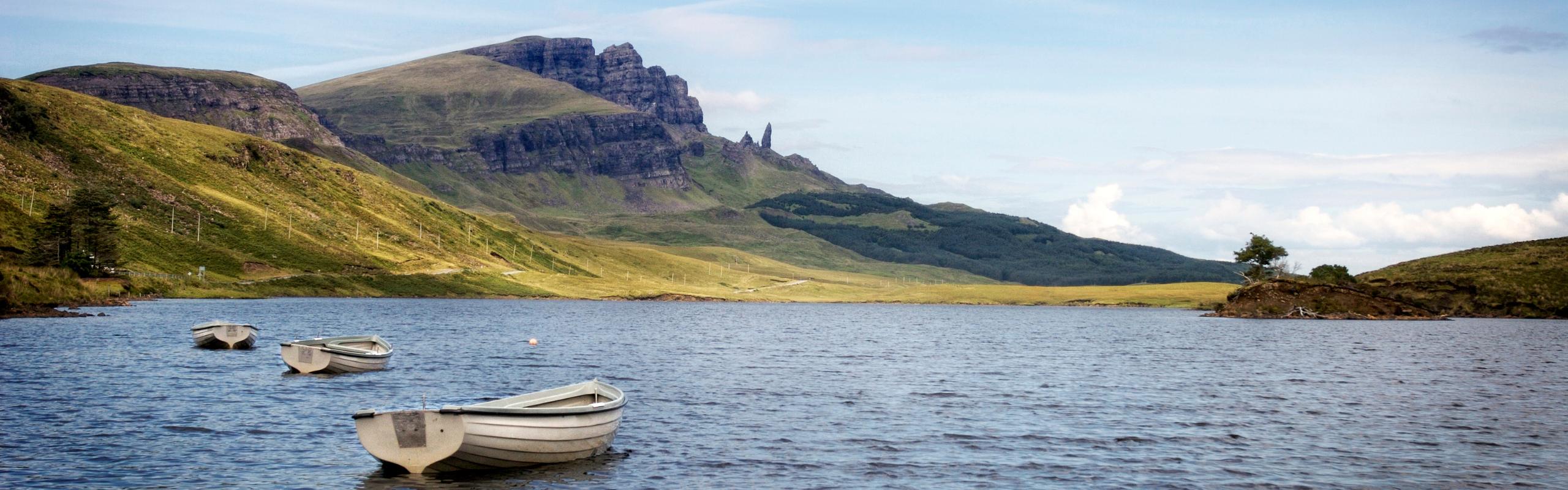
The Old Man of Storr is a prominent rock formation on the Isle of Skye in Scotland. Standing at 50 meters tall, it’s a famous feature of the Trotternish landscape. This large pinnacle of rock is visible from many miles away and has become one of the most photographed locations in Scotland.
Formed by ancient landslides, the Old Man of Storr is part of the Trotternish Ridge, which was created by a massive ancient landslide. The area around it consists of grassy slopes and other rock formations, creating a varied and interesting landscape.
The hike to the Old Man of Storr is popular among visitors. The trail starts from a car park on the main road and climbs steadily uphill. It’s a moderately challenging walk that takes about 2 – 3 hours round trip for most people. The path can be steep and muddy in places, especially after rain.
From the viewpoint near the Old Man, visitors can see across the Sound of Raasay to the mainland of Scotland. On clear days, the views extend far across the water and surrounding countryside. The changing weather on Skye often creates different atmospheres around the rocks, from clear sunny days to misty conditions that partially obscure the formation.
The Old Man of Storr has become a symbol of Skye’s landscape. It features in many photographs and artworks of Scotland, helping to attract visitors to the island. The site is open year-round and is free to visit, although there is a small charge for parking.
For many visitors, seeing the Old Man of Storr is a key part of their trip to Skye. Its distinctive shape and the surrounding scenery make it ideal for photographers and hikers alike. The combination of natural beauty and accessibility has made it one of the most visited natural sites on the Isle of Skye.
Location on Isle of Skye
The Old Man of Storr is located on the Trotternish peninsula (IV51 9HX) in the northeastern part of the Isle of Skye, about 6.8 miles (11 km) north of Portree. It’s easily accessible from the A855 road that runs along the coast.
From this vantage point, visitors can enjoy wide-ranging views that showcase Skye’s diverse landscape:
- To the south, on clear days, you can see the jagged peaks of the Cuillin mountains, about 20 miles away. You are looking over the top of Portree, beyond Loch Leathan and Loch Fada.
- Looking east, the view extends over the Sound of Raasay to the Scottish mainland. Beyond Raasay, you can see the Applecross peninsula on the mainland.
- Facing north, the view caries over the sea. Interestingly, if you were to travel in this direction, the next landmass you’d encounter would be the far eastern coast of Russia, near its border with Alaska – over 3,500 miles away.
These expansive views give visitors a sense of Skye’s place in the wider landscape, from the nearby Cuillin to distant continents. Standing here, surrounded by rock formations millions of years old, you can appreciate both the vast scale of the landscape and the depth of its history.
The Name of Storr
The origin of the name “Storr” is believed to come from Old Norse, meaning “Big” or “Great.” This reflects the impressive nature of the rock formation and its surrounding landscape.
As for “Old Man of Storr,” this name has its roots in the Gaelic language. In Gaelic, the formation is known as “Bodach an Stòrr.” “Bodach” translates to “old man” in English, but it’s worth noting that in local usage, “bodach” is often used as a playful or affectionate term for a grumpy old man.
So, when you hear “Old Man of Storr,” you’re essentially hearing a partial translation of its Gaelic name, which paints a picture of a large, perhaps a bit cranky, ancient figure standing watch over the landscape.
Geological Formation of the Old Man of Storr
The Storr is part of Trotternish Ridge
The Old Man of Storr is a key feature of the Trotternish Ridge, which forms the backbone of the Trotternish peninsula on the Isle of Skye. This ridge stretches for 30 kilometres, making it the longest continuous ridge in the United Kingdom. The Trotternish Ridge is known for its unusual and dramatic landscapes, shaped by both massive landslides and ongoing erosion processes.
Volcanic activity and landslides
The formation of the Trotternish Ridge, including the Old Man of Storr, began during the Paleogene period, approximately 60 million years ago. During this time, the area experienced significant volcanic activity, resulting in vast lava fields that solidified into layers of hard basalt rock.
Over time, the weight of these basalt layers exerted immense pressure on the softer sedimentary rocks beneath. This pressure caused the underlying layers to compress and break down, leading to massive landslides. These landslides shaped the distinctive slopes, cliff faces, and gullies that we see today in the Trotternish Ridge.
How old is the Old Man of Storr?
While the rocks that make up the Old Man of Storr are around 60 million years old, the formation as we see it today is the result of more recent geological processes. The Old Man of Storr itself was sculpted through a process known as periglacial decompressive spalling (Livingston et al, 2021).
This process involves the gradual erosion of the rock formation over millions of years. Water seeps into cracks in the rock, then freezes and expands, gradually prying the rock apart. This freeze-thaw cycle, repeated countless times over glacial ages, has shaped the Old Man of Storr into its current form.
It’s important to note that this erosion process is ongoing. The Old Man of Storr continues to change, albeit very slowly, as it’s exposed to the elements.
Is the Old Man of Storr part of the Quiraing?
While both the Old Man of Storr and the Quiraing are part of the Trotternish Ridge, they are separate features, roughly 11 miles apart. The Old Man of Storr is located in the southern part of the Ridge, while the Quiraing is situated further north. Both were formed by the same geological processes and are part of the same larger landscape, but they are distinct locations on the Isle of Skye.
The Old Man of Storr and the Quiraing share a common geological history, both being products of the ancient landslides that shaped the Trotternish Ridge. However, each has its own unique characteristics and offers visitors different experiences of Skye’s dramatic landscape.
Visiting the Old Man of Storr
How to get there
To reach the Old Man of Storr, use the postcode IV51 9HX for your GPS. The site is a short drive from Portree, the capital of Skye.
If you’re using public transport, look for local bus services heading towards Staffin from Portree. The 57A bus route from Portree towards Staffin stops near the trailhead.
Parking Information
Parking is available on-site for £6.
Best time to visit
The Old Man of Storr is accessible year-round, but your experience can vary greatly depending on when you visit:
- Summer (June-August): Longer days and milder weather, but also the busiest period. The best time to visit depends on your preferences. For photographers and early risers, sunrise can offer stunning views.
- Spring/Autumn (April-May, September-October): Often ideal, with fewer tourists and generally good weather.
- Winter (November-March): Challenging conditions but breathtaking scenery for those prepared for the cold.
Weather considerations
Weather at the Old Man of Storr can be variable and change rapidly. Here are some key points to keep in mind:
- The Storr pinnacle is relatively high up and can be shrouded in mist on cloudy and foggy days.
- Views for many are a significant part of the experience, some may feel misty weather adds to the surrealness of the experience.
- Weather can vary across the island. It’s possible for Storr to be clouded over while other nearby attractions like the Quiraing are clear.
- Cold winds can blow in from the sea, bringing heavy rain showers.
- It’s advisable to check the weather forecast and plan your visit to Storr on the clearest day possible.
Given these factors, Storr is perhaps the most weather-dependent attraction on Skye. On days with poor visibility, it might be better to visit other locations on the island.
Hiking the Old Man of Storr
Do you have to hike to the Old Man of Storr?
The Old Man of Storr is visible from various places across the Isle of Skye, so hiking is not essential if you simply want to see this impressive rock formation from a distance. You can appreciate its distinctive shape and size from several vantage points around the island.
However, if you want to experience the full majesty of the Old Man of Storr and enjoy the panoramic views from its base, hiking is necessary. There is no other way to reach the viewpoints close to the formation except on foot.
For those unable or unwilling to hike, it’s still possible to enjoy views of the Old Man of Storr from the road or from other locations on the island. But for the full, up-close experience and the reward of the summit views, the hike is essential.
Storr Trail Description
The hike to the Old Man of Storr is a steady uphill climb. The trail starts from the car park and is well-maintained. Initially, the path is wide and covered with gravel. About halfway up, it transitions to a dirt trail.
Around two-thirds of the way up, the trail changes to larger, uneven boulder steps. The incline is significant throughout the hike. Most hikers complete the ascent in 2 – 3 hours, depending on their pace and stops to admire the view.
The trail can be muddy and slippery after rain, particularly on the dirt sections and rocky areas. Near the top, the path becomes less clear and can be difficult to follow in misty conditions.
For the best views of the Old Man of Storr, continue following the trail along the ridge to the right after reaching the main viewpoint. This leads to another prominence with a more expansive view.
There’s also a circular route option for more experienced hikers, which continues past the main viewpoint and loops around the back of the Storr. This section of the trail is more challenging and can be dangerous in wet conditions or poor visibility.
While the hike is manageable for people with average fitness, it does require some effort and proper footwear.
How high is the climb to Old Man of Storr?
The Old Man of Storr itself rises 49 meters tall. The hike to the viewpoint will take you up around 1100ft.
The hill above the Old Man of Storr, called Storr, reaches a height of 719m (2,358 feet).
How long does it take to see the Old Man of Storr?
The total time for the visit, including the ascent, time at the viewpoint, and descent, typically takes about 2 – 3 hours.
Do you need hiking boots for Old Man of Storr?
While hiking boots are not strictly necessary, sturdy footwear with good grip is highly recommended for the Old Man of Storr hike. The trail can be steep, muddy, and slippery, especially after rain. Water-resistant hiking shoes or boots are ideal for the conditions. The path includes gravel, dirt sections, and uneven rocky areas, so appropriate footwear will improve safety and comfort during the hike.
What is the best time of day to visit the Old Man of Storr?
The best time to visit the Old Man of Storr is in the morning. Early visits offer several advantages: smaller crowds and easier parking. The site is most crowded between 10 am and 3 pm, so arriving before this rush can enhance your experience. Storr is known as an excellent place to enjoy the sunrise, providing views and great photography opportunities in the early morning light.
Folklore and local stories
The Giant Storr
Local legend tells of giants who once roamed Skye, shaping the land with their battles. One such giant, Storr, fell in combat where the Old Man of Storr now stands. Over time, nature reclaimed his body, turning it to stone. The rock formation we see today is said to be Storr’s thumb and fingers poking through the earth.
The Couple and the Faerie
A newly married couple began a tradition of visiting the cliffs near Storr every day to watch the sunrise. A local faerie noticed their daily visits over many years. As the couple aged, their journey became increasingly difficult. Eventually, the wife could no longer make the climb, so her husband carried her.
One day, the faerie saw only the husband struggling alone. Learning that they had grown too old to make the journey together, the faerie offered a solution. It promised to ensure they could be together at their special place every day if the man brought his wife one last time.
Despite being wary of faerie tricks, the man agreed. The next morning, he carried his wife to their favorite place. The faerie appeared and, in a flash, the couple vanished. In their place stood two stone pinnacles – one tall and strong, the other leaning gently.
Some interpret this as a testament to enduring love, while others see it as a cautionary tale about the tricky nature of faerie bargains. The story reflects the dual nature of faeries in Scottish folklore – both helpful and mischievous.
Storr as part of Isle of Skye History
Did Vikings go to Isle of Skye?
The name “Storr” itself is believed to derive from Old Norse.
This linguistic connection is further supported by a significant discovery made in January 1891 near the Storr Rock. A Viking hoard was unearthed, consisting of 106 coins and 23 silver items, including jewelry and ingots, dating from 892 AD to 942 AD.
The hoard’s contents are remarkably diverse. While many coins were Anglo-Saxon, several originated from distant lands such as Samarkand and modern-day Tashkent in Central Asia, with some dating back to the Persian Empire. This variety illustrates the extensive trade networks of the Viking era, connecting Skye to the far reaches of the Silk Road.
The presence of these coins from Persia and Central Asia at the foot of the Old Man of Storr, combined with the likely Norse origin of the name “Storr,” provides compelling evidence of significant Viking activity and influence on Skye. Today, this incredible find can be viewed at the National Museum of Scotland, offering a tangible link to Skye’s Viking past.
Practical Information
Facilities near the Old Man of Storr include parking and public toilets, making it easy to start your hike with basic needs covered. A small shop is also located near the trailhead, perfect for picking up snacks or essentials.
For those interested in a deeper experience, download the Experience Skye app before your visit. It provides audio guides, stories, and up-to-date details about facilities, parking, and more. The app works offline, so even when you’re high up on the trail, you’ll have access to Skye’s rich history and legends, enhancing your adventure.
Encouragement to visit responsibly
As you explore the Old Man of Storr, we ask that you tread lightly and respect the landscape. Stick to marked paths to protect the fragile environment, and take any litter with you to help keep this iconic site pristine for everyone to enjoy. By taking small steps, we can all contribute to preserving Skye’s natural beauty for future visitors and the local community alike.
Nearby Attractions and Recommended Visits
The Old Man of Storr is part of a larger area with several points of interest. Here are some key attractions and recommendations:
1. North End Circular Route: A spectacular circular route starts from the Old Man of Storr, taking in the north end of the island. This includes:
-
- The Kilt Rock
- Staffin Museum
- Staffin Beach
- The Quiraing
- Duntulm Castle
- Uig
2. Portree: The capital of Skye is located near the Old Man of Storr. It provides amenities such as restaurants and shops, making it a good base for exploring the area.
From the heights of the Old Man of Storr, you’ll enjoy a sweeping view of the Sound of Raasay and the Isle of Raasay itself. If the view inspires you, consider making the short ferry trip from Sconser to experience Raasay up close.
3. A visit to the Isle of Raasay makes for a great day trip from Skye, with several highlights to explore:
Scenic Ferry from Skye: Start your journey with a short ferry from Sconser. The crossing offers beautiful views of Skye’s Cuillin mountains and rugged coastline, giving you a chance to take in the island’s dramatic landscapes from the water.
Raasay Distillery: Once on the island, you can visit the Raasay Distillery, where local barley is grown and distilled into whisky. It’s an opportunity to learn about the island’s modern whisky-making process while supporting local agriculture.
Tranquil Landscapes: Despite being about the same size as Manhattan, Raasay has only 160 residents. You’ll find peaceful walking trails and scenic views that provide a calm escape from busier areas.
Views Back to Skye: The island offers stunning views back across the water to Skye, including perspectives of the Old Man of Storr and the Cuillin range that you won’t find elsewhere.
Scenic Ferry Ride: Start your journey with a short ferry from Sconser. The crossing offers beautiful views of Skye’s Cuillin mountains and rugged coastline, giving you a chance to take in the island’s dramatic landscapes from the water.
Raasay Distillery: Once on the island, you can visit the Raasay Distillery, where local barley is grown and distilled into whisky. It’s an opportunity to learn about the island’s modern whisky-making process while supporting local agriculture.
Tranquil Landscapes: Despite being about the same size as Manhattan, Raasay has only 160 residents. You’ll find peaceful walking trails and scenic views that provide a calm escape from busier areas.
Views Back to Skye: The island offers stunning views back across the water to Skye, including perspectives of the Old Man of Storr and the Cuillin range that you won’t find elsewhere.
Key Academic Insights for Detail Lovers and Fellow Skye Nerds.
Glaciation and Landslides: During the Late Devensian glaciation, the Trotternish Peninsula, including the Storr, was affected by a major ice sheet that moved northward. Interestingly, despite this glaciation, the Storr (the hill above the Old Man Pinnacle) may have stood as a nunatak (a peak not covered by ice). This glaciation also influenced landslides on the east side of the ridge, which are some of the most extensive in Britain. This makes it an intriguing location for understanding the interaction between ice and landform development. Ballantyne, C. K. (1990).
International Research Importance: The Storr is internationally recognized for its significant contribution to the study of zeolite mineralisation, and its unique post-eruptive hydrothermal conditions. his mineralisation took place long after the lava flows cooled, as heated fluids circulated through the rock layers. Over 20 zeolite species, including apophyllite, gyrolite, and stilbite, have been found at the site. The area is particularly significant for mineralogical research due to the variety and beauty of the minerals. Livingstone et al (2021)
References
Ballantyne, C. K. (1990). The Late Quaternary glacial history of the Trotternish Escarpment, Isle of Skye, Scotland, and its implications for ice-sheet reconstruction. Proceedings of the Geologists’ Association, 101(3), 171-186.
Livingstone, A., Highton, A. J., Smith, C. G., & MacFadyen, C. C. J. (2021). Chapter 6 Scottish mineral Geological Conservation Review sites – Late-stage hydrothermal minerals. Proceedings of the Geologists’ Association. Available online 15 October 2021.