
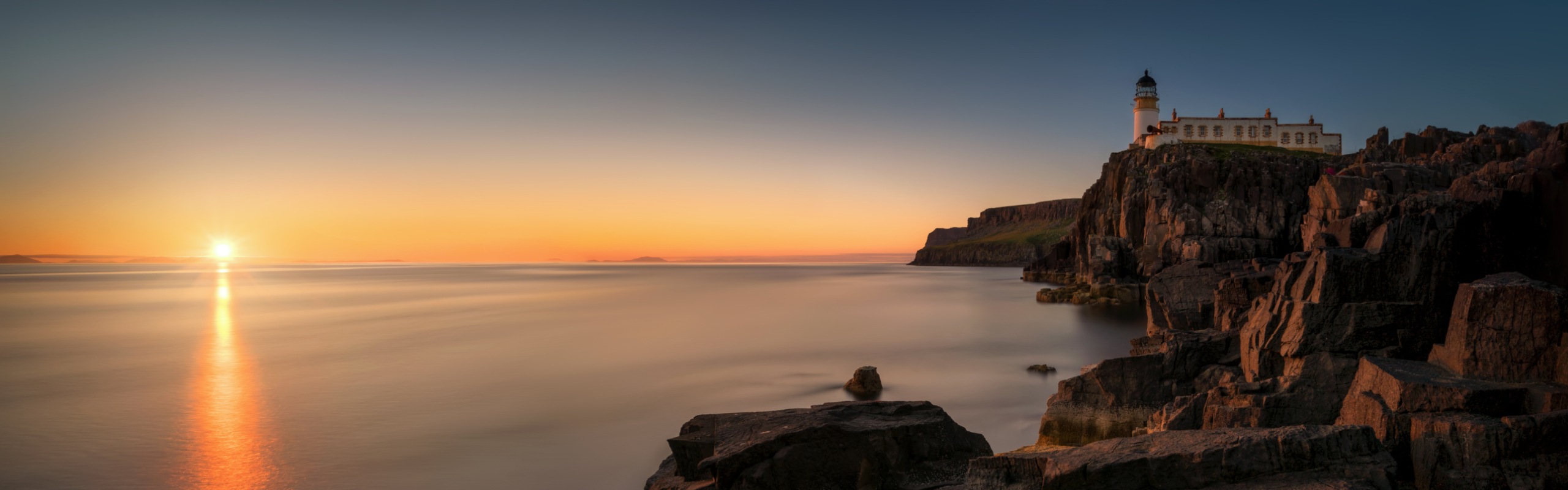
Neist Point Lighthouse - Visiting, Wildlife and Fishing
- Last Updated:
Neist Point, located on the westernmost tip of the Isle of Skye in Scotland, is a place of natural beauty and historical importance. This guide will help you plan your visit to this stunning location, known for its lighthouse, dramatic cliffs, and rich wildlife. The light house is not open to the public, but you can go down and explore around the outside of the grounds. This lighthouse situated in one of the more remote areas on the island, from Portree the journey time to the light house is 1 hour, from the Skye Bridge the journey time is around 1hr 35 mins.
The Lighthouse at Neist Point
The Neist Point Lighthouse is the main attraction in the North West of Skye and has been made famous by the incredible photographs captured of the region. Constructed in 1909 by engineer David Alan Stevenson, a member of a renowned family of lighthouse engineers, the project cost £4,350. The lighthouse’s lantern, crafted by Dove & Co for £1,100, and the lightroom machine, made by Milne & Co for £418, were key components of the lighthouses contruction.
Initially equipped with a fog horn, which still remains today, the lighthouse was automated in 1990. This led to the removal of its original lens, which now resides in the Museum of Scottish Lighthouses in Fraserburgh, near Aberdeen. Today, the Northern Lighthouse Board headquarters in Edinburgh operates the lighthouse remotely.
The primary purpose of Neist Point Lighthouse is to ensure the safety of ships navigating The Minch, the sea channel separating the Outer Hebrides from the mainland and the Isle of Skye. It provides a crucial fixed light, guiding vessels away from hazardous areas and towards safer routes, playing a vital role in preventing shipwrecks and maritime accidents.
The former keepers’ cottage found at the lighthouse is now privately owned, though it has been left abondened.
For movie fans, Neist Point’s landscape caught the eye of filmmakers, serving as a backdrop for scenes in the 2012 film “47 Ronin,” starring Keanu Reeves.
Geological and Natural Features
The cliffs at Neist Point, formed from ancient lava flows, feature basalt columns reminiscent of those at the Giant’s Causeway in Northern Ireland. This unique geological formation adds to the commanding photographic appeal and scientific interest.
The area around Neist Point is home to several species of rare and unusual plants, including alpine varieties such as pink and white saxifrages. These hardy plants have adapted to thrive in the harsh coastal environment, providing splashes of colour among the rugged landscape of rocks , grass and sheep.
Wildlife at Neist Point
Neist Point offers exceptional opportunities for wildlife enthusiasts. The surrounding waters are a hotspot for marine life, with recent sightings including minke whales, harbour porpoises, common dolphins, and otters. Lucky visitors might also spot basking sharks, making it an ideal location for those keen to observe these creatures in their natural habitat.
Birdwatchers will find Neist Point equally rewarding. The cliffs serve as a sanctuary for a variety of seabird species. Gannets, black guillemots, razorbills, and European shags are common sights. Recent observations have also included Manx shearwaters, puffins, corncrakes, great northern divers, and common terns. The diversity of bird life makes Neist Point a must-visit destination for ornithology enthusiasts.
The Walk to Neist Point
The journey to Neist Point is as memorable as the destination itself. Here’s what you need to know:
- The public road ends about a mile from the lighthouse.
- Most of the path is paved, making it easy to follow.
- The initial part of the walk involves a steep downhill section.
- A handrail is available to assist walkers.
- The return journey includes a challenging uphill climb.
As you walk towards the lighthouse, keep an eye out for the aerial cableway station at the start of the path and the impressive rock formation called An t-Aigeach (meaning “the stallion” in Gaelic). You’ll also discover small, sandy coves along the rocky coastline.
Best Times to Visit Neist Point
Neist Point offers different experiences throughout the year:
- Summer (June to August): Longer daylight hours and milder weather, but more crowded.
- Spring (March to May) and Autumn (September to November): Fewer visitors and pleasant weather.
- Winter (December to February): Dramatic seas and potential for seeing the Northern Lights, but challenging weather conditions.
How to Get to Neist Point
Reaching Neist Point requires some planning:
- By car: From Portree, take the A87 towards Dunvegan, then follow signs to Glendale and Neist Point. This route from Dunvegan goes along narrow single track roads for quite some time. If you are uncomfortable with driving on such road, you may wish to plan your return during daylight hours.
- By public transport: There are sadly no suitable public transport options to this location
- Parking is available at the end of the public road, but spaces can be limited during peak seasons. Keep in mind – on sunny sunset evening this cliff looking on to neist point are full of photographers. However, there are many quiet spots further down toward the lighthouse.
Practical Information for Visitors
Facilities
- Toilets: No public toilets are available at Neist Point. The nearest facilities are in Glendale, about 7 miles away.
- Food and drink: No cafes or shops at the site. Bring your own food and water.
- Shelter: Limited shelter available. Come prepared for changing weather conditions.
Accessibility
- The steep path and uneven terrain make Neist Point challenging for those with mobility issues.
- Not suitable for wheelchairs or pushchairs.
Family-Friendly Information
- Children: The walk can be enjoyable for families, but keep a close eye on children, especially near cliff edges. The walk back up to the car park is steep and may be tiring for some young children.
- Dogs: Dogs are welcome but must be kept on a lead due to livestock in the area and cliff edges.
What to Bring
To ensure a comfortable visit, consider packing:
- Sturdy walking shoes
- Waterproof jacket
- Layers of clothing (the weather can change quickly)
- Camera
- Binoculars for wildlife spotting
- Snacks and water
Fishing at Neist Point
For angling enthusiasts, the sheltered bays of Neist Point, particularly Moonen Bay, offer excellent fishing opportunities. With several species of fish available, including Mackerel, Flounder, Cod and Pollack. For those looking to fish from here – head down below the lighthouse and onto the rocks where you would be casting into deep waters. There are steeper section, and sheer drops here that require careful navigation. For those unused to fishing on the Scottish coast this is perhaps not a suitable location for a beginner.
Fishing Spots and Techniques
- When you arrive, look for the flattest rocks you can find close to the water’s edge. The lower areas are better for landing fish, but prioritize safety.
- There’s a small harbour/landing area to the left of the lighthouse that’s more sheltered from the tide.
- To the right of the lighthouse, there’s an inlet known for big pollack.
- Heavy spinning gear is recommended for targeting pollack.
- Bottom fishing can yield species like spurdog and ling.
Fishing Weather Considerations
- Strong westerly winds can create difficult conditions with large swells.
- Be prepared for rain and wind.
Safety Considerations
While beautiful, Neist Point can be dangerous if proper precautions aren’t taken:
- Stay on marked paths and away from cliff edges. A tragic incident in June 2013, where a visitor fell 35 metres from the cliff, underscores the importance of this precaution.
- Check weather forecasts before your visit and be prepared for sudden changes.
- Wear appropriate footwear with good grip.
- In case of emergency, the nearest medical facilities are in Portree.
Nearby Attractions
If you’re planning a longer stay in the area, consider visiting:
- Dunvegan Castle: About 30 minutes drive from Neist Point
- Coral Beach: A beautiful beach near Claigan, about 40 minutes away