
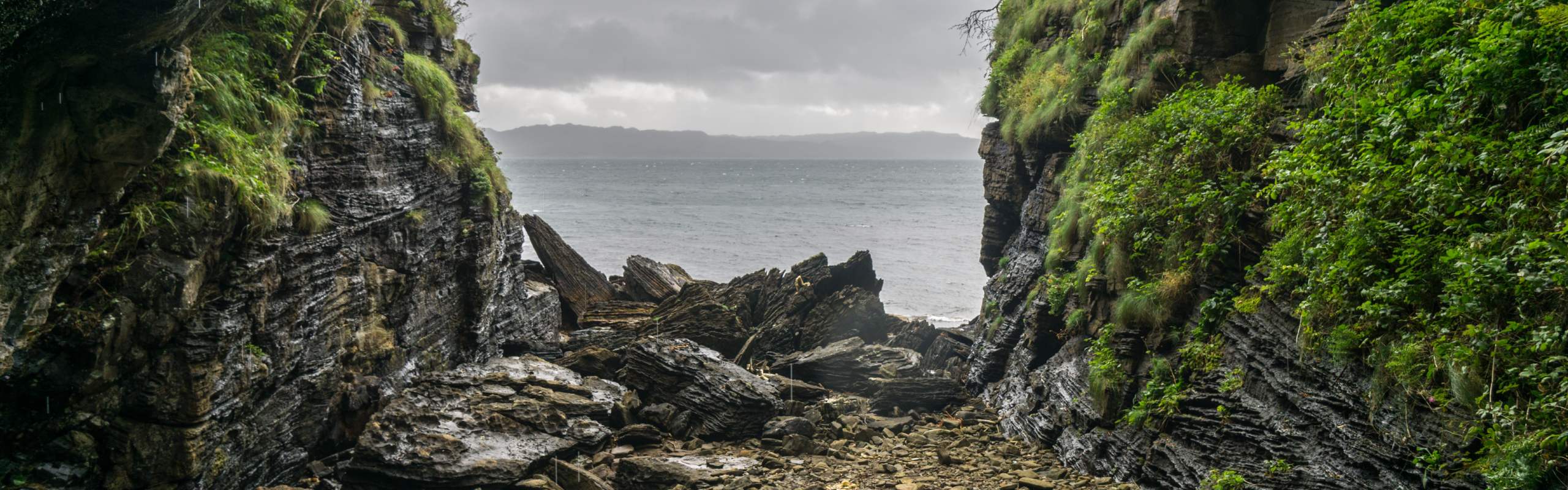
Spar Cave is indeed one of the natural wonders of Skye. Embedded beneath sheer black cliffs on the western shore of Loch Slapin, it is only accessible at low tide, making a visit here an experience that requires planning and more than a little adventure. While not as famous as some of Skye’s other attractions, those who make the effort to reach Spar Cave are rewarded with a journey into another of Skye’s geological marvels.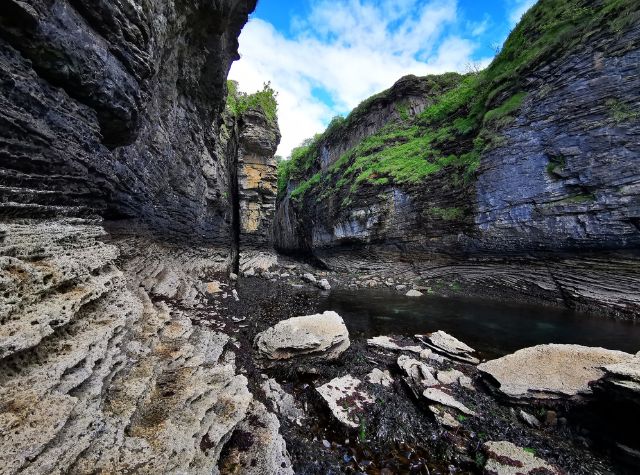
A Bit of History
Spar Cave has been attracting curious visitors for centuries. In 1814, Sir Walter Scott visited the cave and immortalised it in his poem The Lord of the Isles, describing it as;
“The mermaid’s alabaster grot,
Who bathes her limbs in sunken well,
Deep in Strathaird’s enchanted cell.”
At that time, the cave’s formations were still largely intact. However, during the Victorian era, many stalactites and stalagmites were removed by visitors as souvenirs. Areas within the cave are still scarred by the torches carried by these intrigued victorians. Despite the losses, Spar Cave remains a stunning place, with huge columns and flowstone formations that still bear witness to the slow but constant work of water on limestone.
How to Get There
Spar Cave is located nearGlasnakille, close to Elgol on the Isle of Skye. If possible park your car at (///washroom.lend.copies), and walk from here. Parking can be tricky, so leave your car at a safe spot and follow the trails on foot. Walk down the road to your right (facing the sea), until you see an old ruin on your left, with a gate. Hop over the gate.This will lead you to the path down to the shore. Whilst still above the shore, the path will split left and right – it is often easier on the route to the left. It’s about a 15-minute walk down to the cave.
Google Maps is useful for getting close to the cave, but be prepared to do a little route-finding once you’re on foot. The paths are not signposted.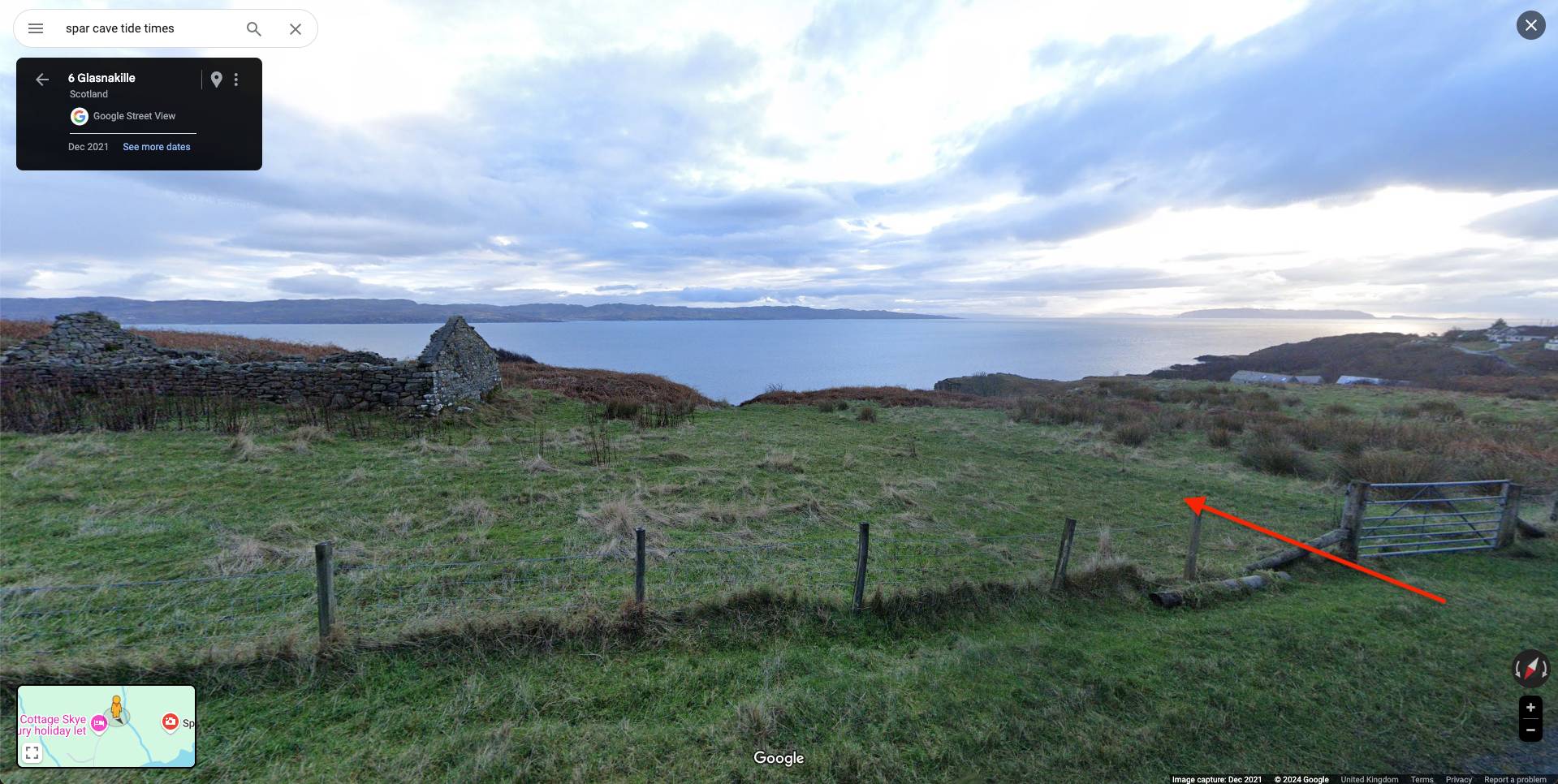
Reaching Spar Cave: Plan Your Visit Carefully
You’ll find spar cave here – ///jetliner.suspends.with. To visit Spar Cave, timing is everything. The cave can only be accessed at low tide. Check the tide tables carefully and allow enough time for both your visit and the return journey to avoid being stranded for hours as the tide rises. The approach to the cave is via a steep and sometimes slippery path down the cliffs, followed by a short walk along the rocky shore. You’ll need to wear sturdy footwear with good grip and be prepared for a bit of scrambling across wet rocks.
The entrance to the inlet that leads to the cave lies just around the first headland. Here, vertical rock walls rise up on both sides leading you to the cave entrance.
Inside the Cave
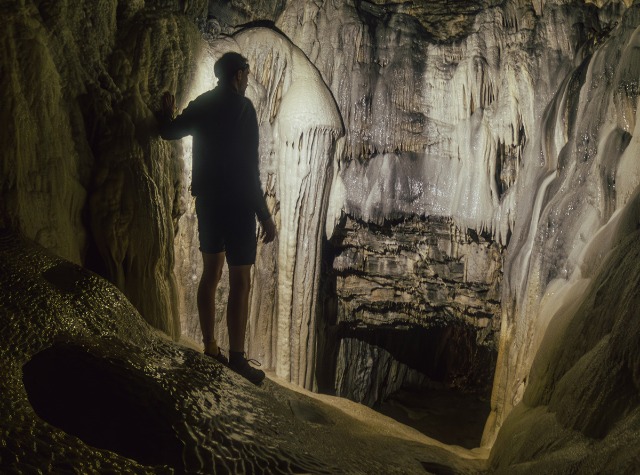
The cave’s features are best appreciated with the aid of a strong torch. Once inside Spar Cave, you’ll find yourself at the base of a flowstone staircase, which looks steeper than it is. Despite the constant flow of water down the steps, the calcite deposits have created a surprisingly grippy surface, making the ascent easier than it appears. Climbing this staircase brings you to a level area from which you can see the cave’s final feature: a crystal-clear pool. This pool is deep and, depending on your level of enthusiasm, you might be tempted to swim across it. However, be aware that the water is cold, and most visitors choose to admire it from the edge rather than take the plunge.
The glittering pools and the towering flowstone formations come alive under bright light.
What to Bring
Visiting Spar Cave is not your typical tourist excursion. There are no signposts, gift shops, or facilities at the site. You’ll need to bring everything with you, including:
- Sturdy footwear: Hiking boots or wellies are ideal, as the rocks along the shore can be slippery with seaweed, and the interior of the cave is wet.
- A head torch: The cave is dark inside, and while handheld torches are useful, having your hands free will make exploring much easier.
- Waterproof clothing: The cave’s interior is wet, and the climb up the flowstone steps involves contact with water and mud.
- Tide tables: Ensure you have up-to-date information on the tides to avoid getting trapped by the rising water.
A Word of Caution
Though Spar Cave is relatively accessible, it is not without its risks. The rocks leading up to the cave can be slippery, and if you mistime your visit, the rising tide could leave you stranded for several hours. For this reason, it’s essential to give yourself plenty of time to explore the cave and make your way back before the tide comes in. As always, when venturing into coastal areas, looking after yourself should be a top priority. Bring a mobile phone with you, and let someone know your plans before you set out.
One more thing… don’t wake the dragon.