
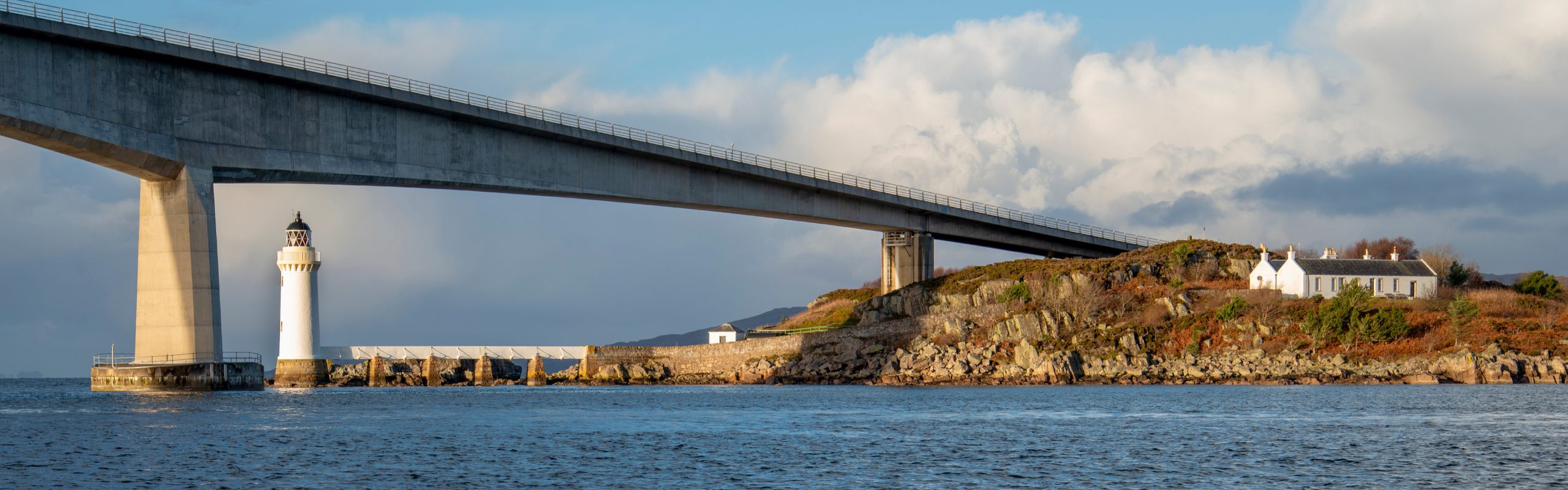
Eilean Bàn, a small island situated between the mainland and the Isle of Skye, holds a significant place in the life of author and naturalist Gavin Maxwell. Known for his book Ring of Bright Water, Maxwell made Eilean Bàn his home during the final years of his life. This island, now partially supporting the Skye Bridge, retains its historical and cultural importance.
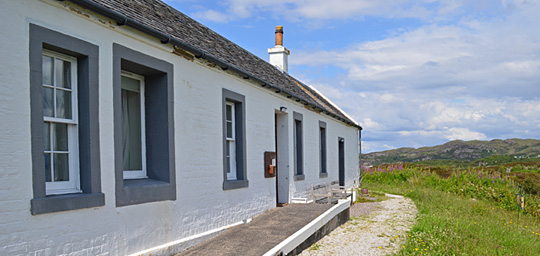 Eilean Ban Cottage © John Allan
Gavin Maxwell’s Connection to Eilean Bàn
Gavin Maxwell purchased Eilean Bàn in 1963, acquiring it from the lighthouse board. By then, his reputation as a writer, conservationist, and adventurer was firmly established. The island became his retreat, offering him a base to continue his literary and artistic pursuits. Using his close friend Richard Frere’s assistance, Maxwell converted the two lighthouse keepers’ cottages into a single home. This transformation enabled him to create a place where he could write, paint, and maintain a small zoo of Scottish wildlife.
Maxwell’s life on Eilean Bàn was deeply intertwined with the natural environment. He used the island as a setting to further his conservation efforts, despite the contradictions posed by his earlier experiences as a shark hunter. His residence here also marked a period of introspection, as he balanced his aristocratic upbringing and wartime experiences with a profound commitment to preserving the local wildlife.
You can watch Gavin Maxwell’s Ring of Bright Water film adaptation here.
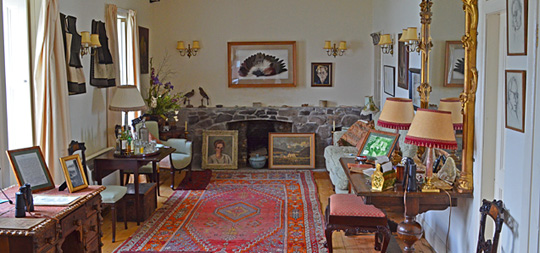 Eilean Ban Interior © John Allan
The Island’s Historical Significance
Long before Maxwell’s arrival, Eilean Bàn had established its importance to the surrounding communities. In the mid-19th century, Trinity House constructed a lighthouse on the island to secure safe navigation through Loch Alsh. Completed in 1857, the lighthouse became a critical landmark for sailors and fishermen. For those leaving or returning to the surrounding villages, it symbolised both departure and homecoming.
Automation of the lighthouse in the 20th century rendered the keepers’ presence unnecessary, opening the door for private ownership. Maxwell’s acquisition marked a new chapter in the island’s history, blending its maritime heritage with his conservationist vision. However, the island’s destiny shifted once more with the construction of the Skye Bridge. The project necessitated the island’s compulsory purchase by the Scottish Office, effectively ending its period of private ownership.
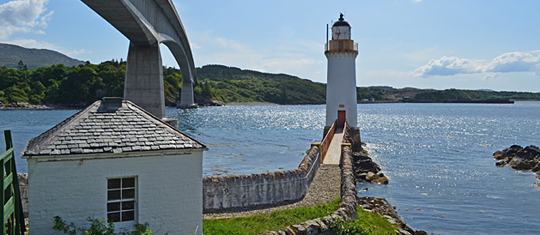 Eilean Ban Lighthouse © John Allan
The Community’s Campaign for Ownership
Following the completion of the Skye Bridge in 1995, Eilean Bàn faced an uncertain future. The Scottish Office’s decision to sell the island at auction provoked strong reactions from nearby communities. Residents of Kyleakin and Kyle of Lochalsh, recognising the island’s historical and cultural ties to the region, launched a campaign to prevent its sale. Their efforts succeeded, and the island was brought into community ownership.
Today, the Eilean Bàn Trust works to preserve the island’s legacy. Its mission focuses on conserving the environment, highlighting its historical connections, and maintaining its significance as a local heritage site. Through the Trust’s efforts, the island continues to serve as a bridge—both literal and metaphorical—linking past and present.
Visiting Eilean Bàn Today
Eilean Bàn remains accessible for visitors (Opening Times 2 Apr 2025 – 27 Oct 2025) offering insights into Gavin Maxwell’s life and the island’s wider historical narrative. Guided tours, organised through the Bright Water Centre in Kyleakin, allow visitors to explore Maxwell’s cottage and the Stevenson lighthouse. The tours provide an in-depth look at the island’s heritage, from its use as a lighthouse station to its transformation under Maxwell’s ownership.
The tours also include opportunities for wildlife observation. Otter hides, located on the northern part of the island, offer views of their natural habitats.