
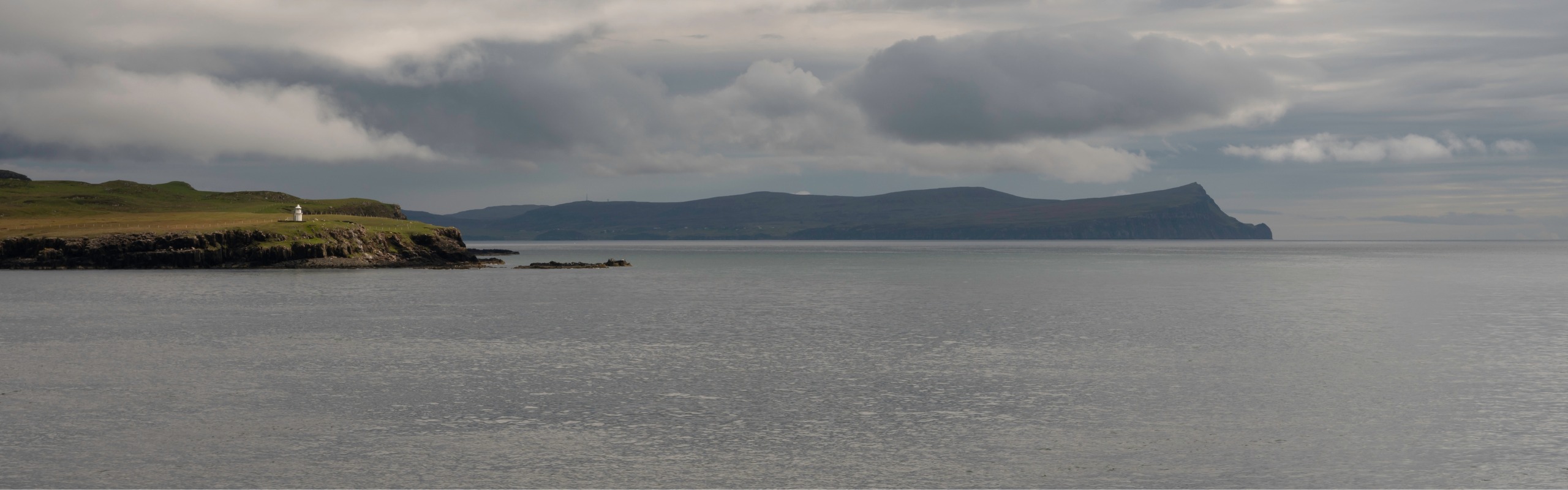
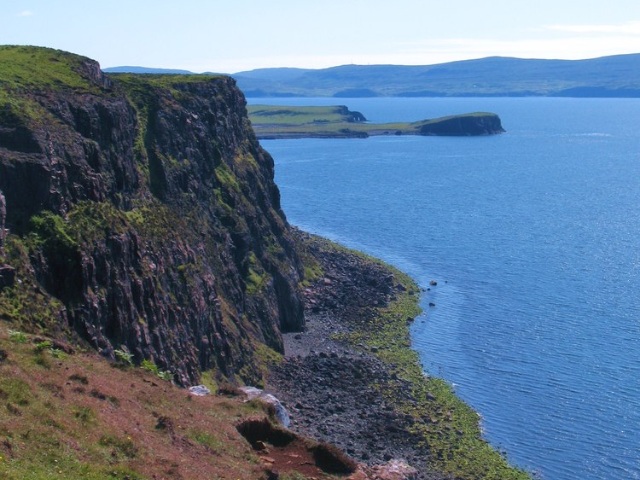
 Waternish Coastline © Gordon Hatton
The walk from Trumpan to the lighthouse on Waternish Point, Isle of Skye, extends 13.5 km (8.5 miles), requiring about 3 to 4 hours to complete. Skirting the cliffs, this straightforward but isolated route draws attention for its rich wildlife, historical ruins, and rugged coastal scenery. Below, the walk is broken down into key segments, covering logistical details, points of interest, and wildlife sightings.
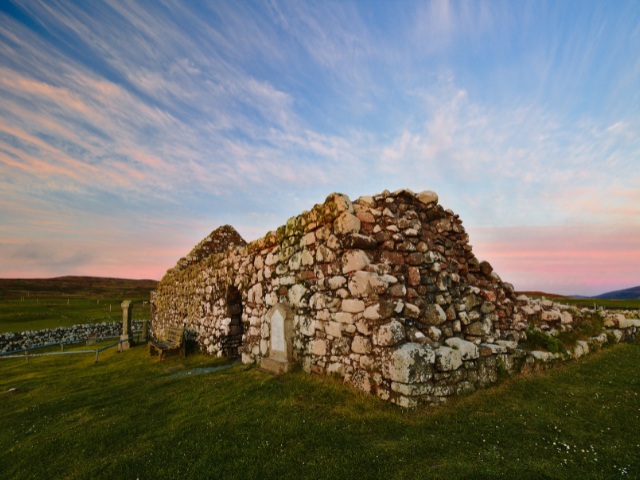 Trumpan Church
Starting the Walk from Trumpan to Waternish Point
The walk begins at Trumpan, where walkers can leave their vehicles at a car park near the ruins of Trumpan Church, roughly 500m southwest of the track’s start at NG229616. The main path leads north, tracing the western side of the peninsula. It offers an established, direct route without steep climbs, though open and exposed to wind, especially in rough weather.
This early part of the walk includes several stops of historical interest. Approximately 1 km from the start, a substantial cairn stands in memory of Roderick MacLeod of Unish, killed at the Second Battle of Waternish in 1530. Roderick, known in Gaelic as Ruairidh Mór or ‘Rory the Great’ was the Chief of Clan MacLeod (famous today for Dunvegan Castle).
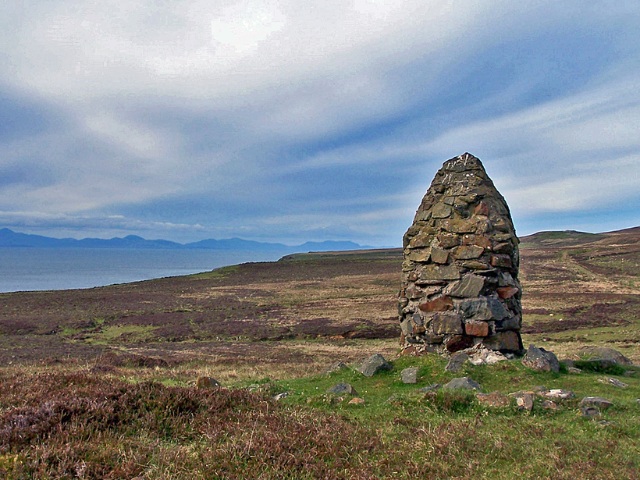 Memorial Cairn © Richard Dorrell
The cairn reads, ‘To Commemorate Roderick MacLeod of Unish who fell in the second battle of Waternish which was flights on this moor against the MacDonald of Trotternish circa 1530. Roderick was the son of John of Waternish and Grandson of Alistair Ruadh of Trumpan’.
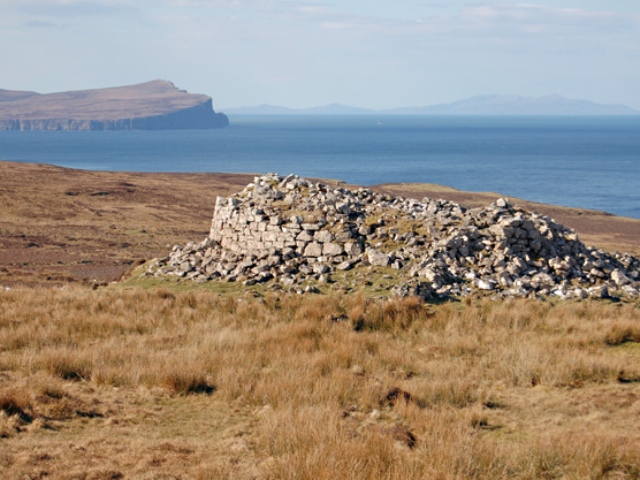
Beyond this, Dun Borrafiach, a broch located 200m from the main path. An easy detour along the line of old turf walls leads to this ancient stone structure. On the southern side of Dun Borrafiach, its massive walls rise to over 3 metres, revealing the remains of a once-solid defensive structure, possibly dating back to the Iron Age.
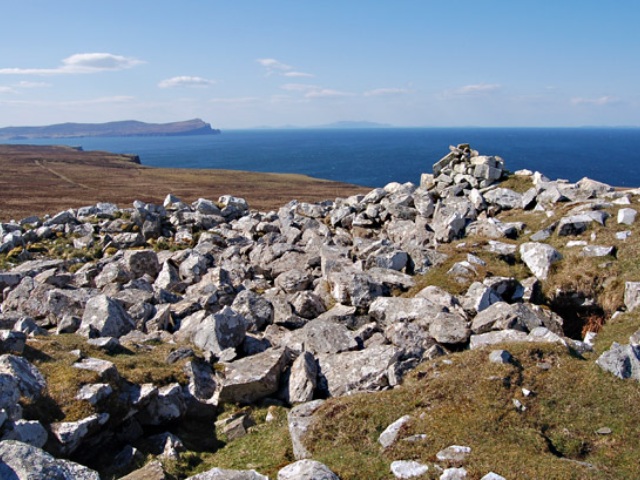
A little further along the route lies Dun Gearymore. Though less intact than Dun Borrafiach, Dun Gearymore provides ample opportunities for exploration, with a large passageway through its fallen stones. These structures reflect the history of conflict and settlement in the region, giving some context into life on Skye several centuries ago.
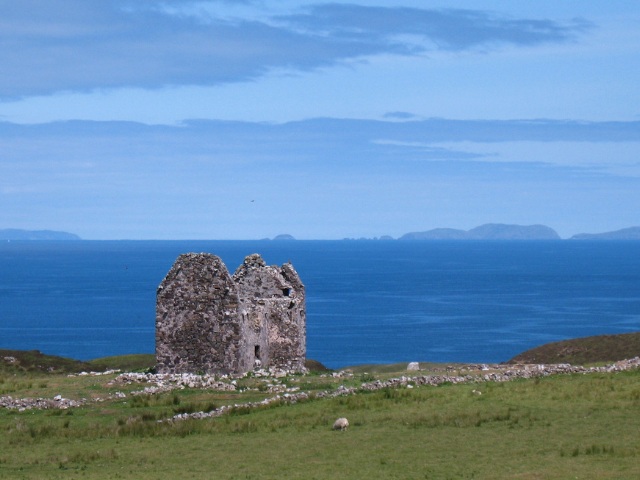 Unish House © Gordon Hatton
Reaching Unish House and the Coastline Beyond
Following another kilometre on the path, walkers arrive at the ruins of Unish House (NG239658). Unlike the brochs, Unish House is a more recent building, likely constructed in the early 1600s as a tenant farmer’s residence. It is thought to be the earlier purely residential house built on Skye, without a defensive structure. Ruined outbuildings and steadings hint at the larger community that once existed here. Unish House’s exposed location brings home the challenges of Skye’s harsh coastal weather, with wind and rain a constant concern, much like it is today.
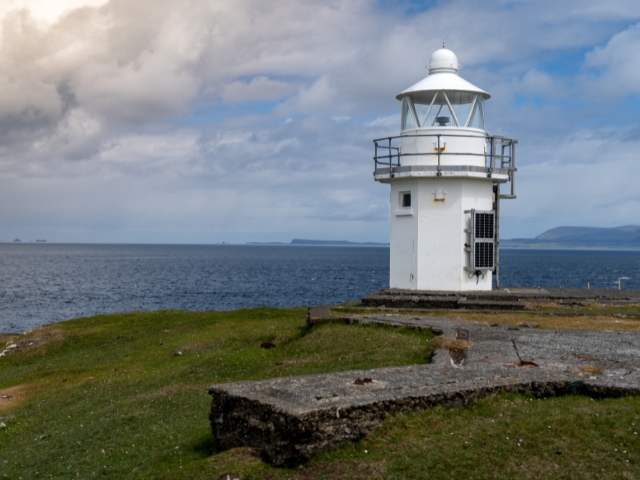
From Unish House, the track ends. Walkers proceed across rougher ground toward the northern coastline, following a route of their choosing along the rocky shoreline. This pathless segment leads to the Waternish Point lighthouse, known for its views and for sightings of passing marine vessels like the CalMac ferry between Uig and Lochmaddy, which travels close to this tip of the peninsula.
Wildlife Along Waternish Point
Waternish Point is well-regarded for wildlife, making this walk a popular choice for those interested in animal and bird watching. Several species are common along the route. Corncrakes are found near Trumpan, while Great Skuas, or “Bonxies,” patrol the skies along the coast, preying on other seabirds. Puffins occasionally visit from the Ascrib Islands, though sightings are infrequent.
For marine life, sightings can be remarkable, with whales, porpoises, and seals frequently spotted around Waternish Point. Whales, including Minke whales, have been seen feeding offshore, sometimes offering displays of their massive backs and dorsal fins as they surface to breathe. Porpoises are more common, and their small black fins are visible offshore as they hunt and play in groups. Walkers with bird-scopes or binoculars will find these tools invaluable for closer observation of marine life.
The cliffs along Waternish Point provide habitat for sea eagles, with sightings of both golden eagles and juvenile white-tailed eagles recorded. Walkers have also noted peregrine falcons along the cliffs, sometimes sighted darting inland at high speeds after emerging from the cliff face.
Return Route Along the Cliffs
After reaching the lighthouse, many walkers opt to return via the cliffside path. This coastal route offers dramatic views and a relatively easy walk, especially when the ground is wet, as the cliff path is often more manageable than the inland track.
The cliff route showcases Waternish’s varied landscape, with grass-topped cliffs falling away steeply to rocky shores. Gannets, guillemots, and razorbills are often seen here, while seals may be observed basking on rocks or singing – their eerie calls carrying across the waves. On clearer days, the Minch’s calm waters afford long-range visibility, making it easier to spot marine life and enjoy unobstructed views of the Outer Hebrides across the water.
Planning Considerations for the Waternish Walk
Walkers are advised to take precautions, especially given the isolated nature of the route. While the terrain poses few technical challenges, the peninsula’s remote setting means weather conditions can quickly shift, and winds are often strong. Preparation for the exposed coastal climate is crucial, with adequate clothing, supplies, and navigation tools recommended. As always, tell someone – your accommodation host or friend, where you are going, the route you plan to take and when you expect to be home. You don’t want to meet the ghost of Ruairidh Mór on a cold night stranded in Waternish, if you do… you better have a dram ready for him in your rucksack.