
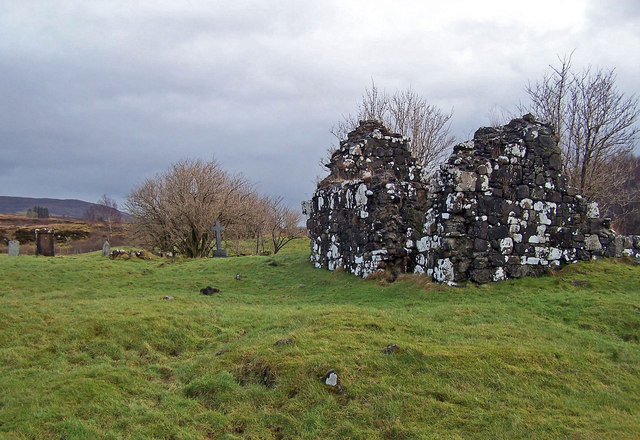
 St Columba’s Island © Richard Dorrell
Hidden along the River Snizort near the village of Skeabost, St. Columba’s Isle is an understated yet rich piece of Skye’s ecclesiastical history. Known in Gaelic as Eilean Chaluim Chille, this small island served as the religious centre of the Hebrides from the 11th to 15th centuries. Though it’s easy to overlook when travelling between Portree and Dunvegan, those who make the effort to find it are rewarded with quiet surroundings, ancient ruins, and a palpable sense of history.
Walk Details
- Distance: 1.2 km round-trip from the parking area
- Duration: Approx. 15–20 minutes (one way), longer if you linger
- Difficulty: Easy, with some uneven ground and occasional mud
- Nearest Postcode: IV51 9NP (near Skeabost House Hotel)
- Parking: Limited roadside parking near the old bridge
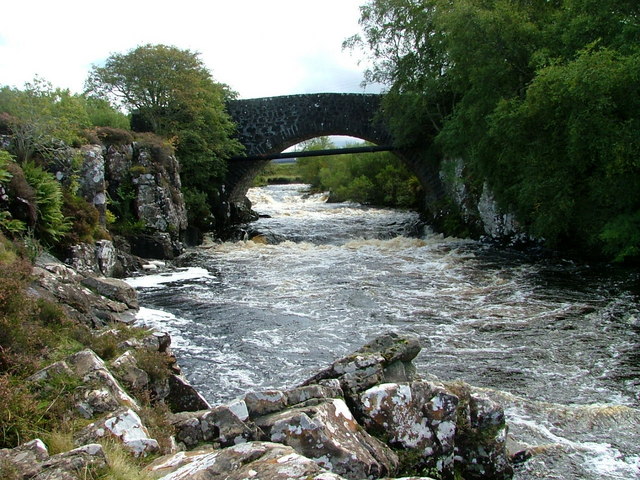 The Old Skeabost Bridge © Dave Fergusson
Getting to St. Columba’s Isle
Finding St. Columba’s Isle requires a bit of navigation, as it’s off the main road and not well-signposted. The best way to reach the site is via the Skeabost Hotel, it is worth stopping in for lunch or afternoon tea before or after your visit.
The start of the walk begins from the Old Skeabost Bridge – ///cured.daffodils.spinning
A path on the right bank of the river leads from here to a red footbridge. This bridge provides access to the island, bringing visitors close to the historic remains without disturbing the natural setting.
The Historical Heart of the Hebrides
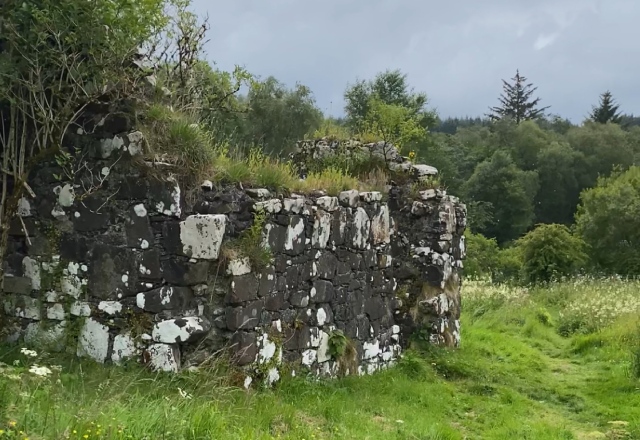
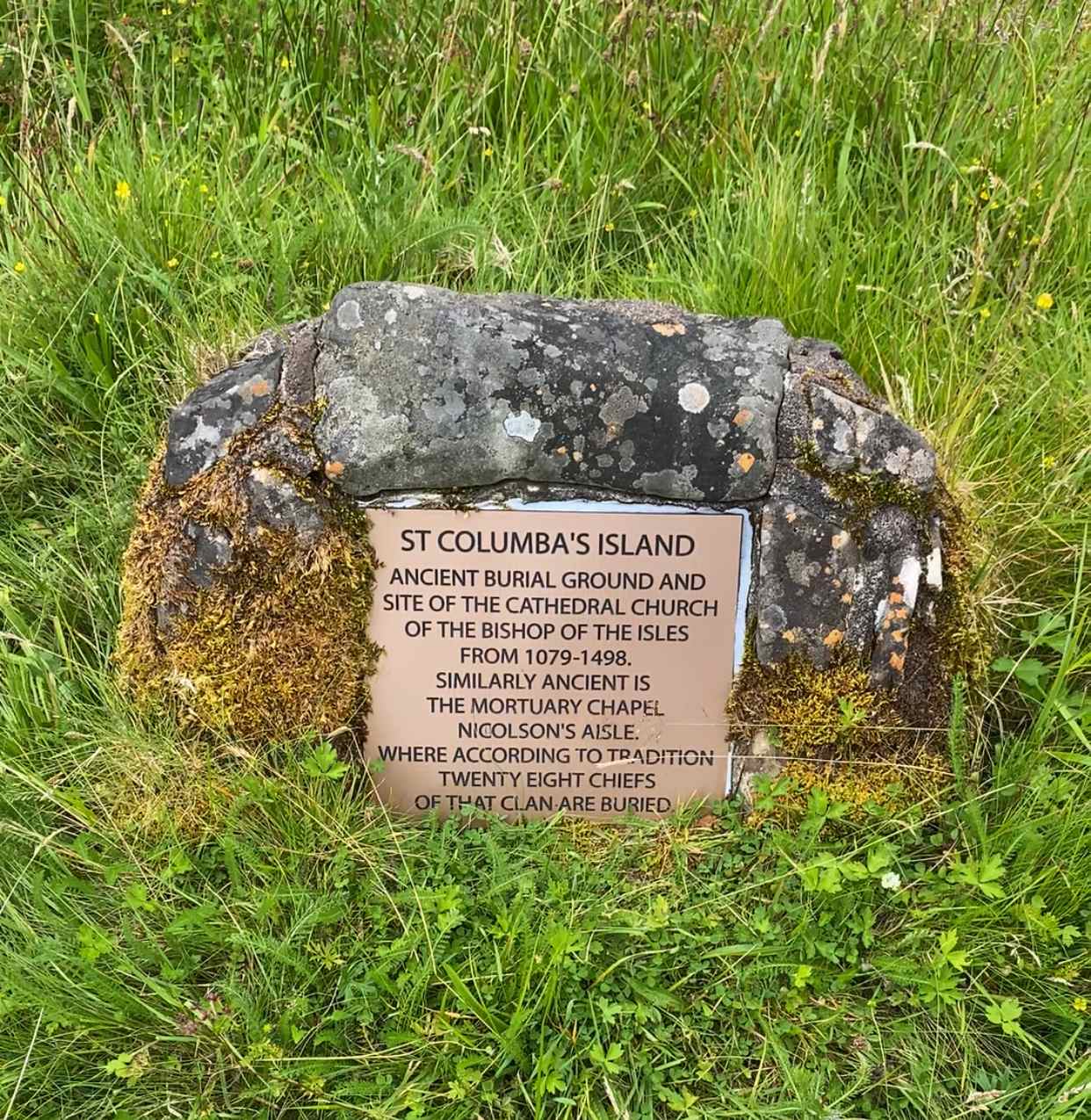
Though St. Columba is often associated with Iona, he also established an early Christian presence here on Skye. The island was home to the cathedral of the Bishop of the Isles from 1079 until 1498, serving as a significant ecclesiastical centre for centuries. Today, you’ll find the remnants of two small chapel buildings and the outlines of other structures that hint at its former prominence.
St. Columba’s Isle is also known for its burial ground, with graves dating from the 11th century to as recently as the 1960s. Among the stones, you’ll see the mortuary chapel known as Aite Adhlaic Mhic Neacail or “Nicolson’s Aisle,” where 28 chiefs of the MacNicol clan are believed to be buried. Inside this chapel is a 16th-century effigy of a warrior in a conical helmet, a carved reminder of the clan’s influence in the region.
A Quiet Place for Reflection
The island’s burial ground and ruins create a solemn atmosphere that invites quiet reflection rather than hurried exploration. Many of the gravestones are heavily weathered, though some have been preserved with transcriptions on plaques. Take a moment to read these, as they offer a glimpse into lives that shaped Skye’s history. It’s a place that requires you to slow down and observe—the rushing Snizort River adds a constant murmur and is well worth walking along. The River Snizort is known for its Salmon and Trout.
Practical Tips for Your Visit
- Footwear: Waterproof boots are recommended, especially after rain, as the path and island can be muddy and uneven.
- Timing: Allow about an hour for a leisurely visit, including the walk from the parking area and time to explore.
- Facilities: There are no amenities on the island itself or near the parking area, though Skeabost Hotel is nearby.
- Respect the Site: This is an ancient burial ground; please be mindful not to disturb the graves or structures.